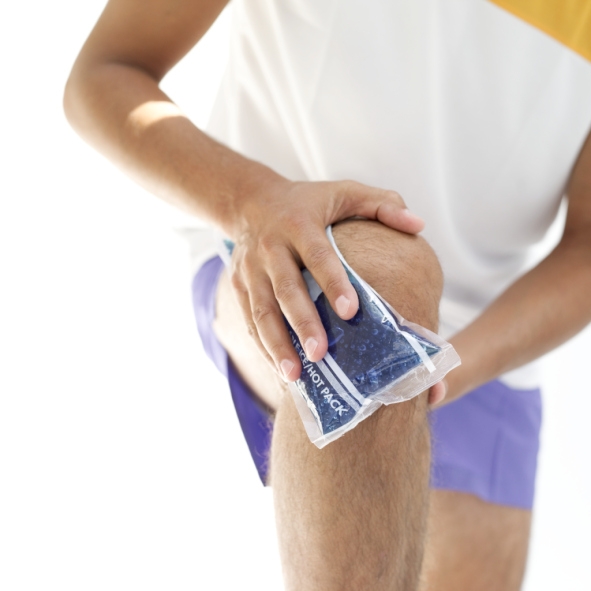
What is Cryotherapy?
Cryotherapy simply means the use of cold as a therapy. When a person is injured, the most common response by the body is pain or muscle spasms. Tendons and ligaments connect the muscles and cones to each other and to other tissues. The basic building material of these is collagen, and collagen stretches and returns to normal depending on the tension that is applied to it. Stretched too far, collagen tears, and this tears blood vessels, allowing blood cells and fluid to escape into the spaces amongst the muscle fibres. Applying cold to the area reduces the amount of fluid flowing into the tissues and also slows the release of chemicals that cause pain and inflammation. It also decreases the feeling in an area by reducing the ability of the nerve endings to conduct impulses. Cold also decreases the activity of cells in order to reduce the amount of swelling and internal bleeding at the injury site. Cooling the tissues reduces muscle spasms. This is done by reducing the muscle’s ability to maintain a contraction.
Types of Cryotherapy
There are different types of cryotherapy. Two of the most common include:
- Ice bags – this can be as simple as placing ice in a plastic bag or hot water bottle, or using cold packs or frozen vegetables. First apply a dry cloth over the area to stop the ice from coming into contact with the skin and then apply the cold pack for no more than 20 minutes at a time. Cold therapy should be stopped when the skin feels numb.
- Ice massage – simply place tap water into a foam cup and freeze completely. Peel back a small amount of the cup and massage onto the sore area with a constant circular motion. This should be stopped once the skin feels numb.
Who should not use Cryotherapy?
Cryotherapy should not be used by people that:
- have circulation problems
- are unconscious
- are unable to respond or that cannot feel cold
- allergic to the cold
Cryotherapy as Cryosurgery
Cryotherapy can also be referred to as cryosurgery or cryoablation, and this is a minimally invasive treatment that uses extreme cold to freeze and destroy diseased tissue, including cancer cells. Liquid nitrogen or argon gas is used on diseased cells inside or outside the body, with the doctor using image guidance techniques such as MRIS, CT scans and other scans to guide the substance to the appropriate treatment area. Cryotherapy can be used for skin tumours, pre-cancerous skin moles, nodules, skin tags, freckles, retinoblastomas, prostate, liver, and cervical cancer.
Some doctors will recommend that you take ibuprofen before the procedure while others will give you a dose of antibiotics to guard against the possibility of infection as a result of the procedure. You need to report all medications, including herbal supplements, that you are taking, as well as all allergies.
Originally published on Oct 25, 2008